LOGO Statement Guideline for International Applicants

Disclaimer

This document has been prepared using publicly available information from the official website of vLOGO (https://www.vlogo.nl/). It is intended as a simplified guide to help international applicants better understand the LOGO statement application process.

This document does not replace the official information provided on the vLOGO website, and in case of any discrepancies, the information on the official website should always be considered leading.

While every effort has been made to ensure accuracy, PsyGlobal does not guarantee that the information presented here is complete or up to date and cannot be held responsible for any inaccuracies or interpretations.

The purpose of this material is solely to support international professionals in navigating the process and advancing their careers in the Netherlands.

————————————————————————————————————————————————-

1. What LOGO is and is not

What LOGO is: 

The LOGO statement is an official assessment by the vLOGO that confirms whether a candidate meets the formal educational requirements to enter the GZ-psychologist training in the Netherlands. It’s valid for 5 years after obtaining it.

Its original purpose was:

→ To determine eligibility for applying to a GZ training position at a recognised institution. Then, why do GGZ institutions often ask for a LOGO statement (even for basic psychologists)?

  • From January 2024, it is mandatory to have a LOGO declaration in order to work as a basic psychologist in insured Dutch mental health care (GGZ) or forensic care.
  • Basic psychologists can be hired in a GGZ organisation, but their hours can not be insured. This could be the reason for organisations to see the LOGO as a requirement.

What LOGO is NOT: 

  • It is not a professional license
  • It is not a BIG registration
  • It is not proof that you can work as a psychologist in the Netherlands
  • It is not an evaluation of your skills or experience

→ LOGO strictly evaluates whether your education matches required academic criteria.

2. Who needs a LOGO statement

You need a LOGO statement if your goal is:

  • To apply for the GZ-psychologist training (GZ-opleiding),
  • To work as a basic psychologist in insured GGZ or forensic care.

→ Who may not need a LOGO statement? A LOGO statement is generally not needed if someone is working outside insured Dutch mental healthcare, for example in coaching, HR, research, education, private non-insured counselling, or other psychology-related roles where the employer does not require it. However, the final requirement always depends on the employer and the role.

→ Is there an alternative to the LOGO statement? There is an alternative to the LOGO statement called Bestuursverklaring Inzetbaarheid Zorgprestatiemodel (BIZ). In short, it’s an employer-signed Deployability Declaration (BIZ) based on education and experience. It is used in the Dutch Zorgprestatiemodel to show that a WO-level psychologist or orthopedagogue meets the requirements to register billable consultations. It is not something you can do independently. The employer checks your background (based on what you provide) and then signs the declaration.

Your employer needs the following to assess and issue a BIZ:

  • Your WO/master’s diploma in psychology or orthopedagogy.
    • If you have a foreign diploma: the employer must evaluate your diploma themselves and compare it with the standards in the BIZ form. You can also apply to Nuffic to get credential evaluation.
  • Your transcript or course overview, so they can compare your education with the required Dutch standards.
  • Proof of psychodiagnostic competence, for example:
    • NIP BAPD registration, or
    • a signed diagnostic declaration from a qualified supervisor.
  • Proof of relevant clinical internship / practical experience in Dutch GGZ and/or forensic care. Foreign work experience does not count for this route.

The employer keeps the required documents on file and makes them available upon request from a health insurer or regulator. BIZ is employer-specific and cannot simply be transferred to a new employer. You should keep the supporting documents for future employers. 

In short: your employer needs enough proof to say, “We checked this person’s education and/or Dutch GGZ experience, and we declare that they can be deployed under the Zorgprestatiemodel.” For more information visit this link.

Important note: BIZ is not a long-term solution. It is a temporary route within the Zorgprestatiemodel, mainly created as an alternative for a certain timeframe. It also depends on employer willingness as the employer is responsible for confirming that the psychologist is qualified and competent to work under their organisation. The official wording says BIZ can be issued until 31 December 2026. It does not necessarily mean that every already-issued BIZ automatically expires on that date, but it does show that this route is temporary and uncertain after 2026.

3. Main eligibility conditions

To receive a LOGO statement, you must meet all core criteria below:

a) Educational requirement

You must have completed a university-level Master’s degree in one of the following:

    • Psychology
    • Educational Sciences / Orthopedagogy
    • Health Sciences (with a mental health focus)
  • A bachelor’s degree alone is not sufficient.

b) Required academic coursework (ECTS-based)

You must have completed a university-level Master’s degree in one of the following:

  • Clinical Psychology / Special Education
  • Personality Theory
  • Developmental Psychology
  • Psychopathology
  • Neuropsychology
  • Diagnostics & assessment methods
  • Treatment/intervention methods
  • Research skills
  • Interviewing, observation, reporting
  • Basics of healthcare systems and legal aspects

→ These are evaluated in ECTS (credits) and must meet minimum thresholds.

c) Clinical internship (or equivalent)

You must demonstrate at least:

  • 520 hours of clinical experience
  • Covering diagnostics and treatment
  • Minimum 60% active participation
  • Balanced exposure to diagnostics and treatment

d) Psychodiagnostic cases

You must have completed:

  • At least 2 supervised psychodiagnostic cases
    • These must:
      • Follow a structured diagnostic reasoning process
      • Include testing, interpretation, and reporting
      • Be recent (max. 2 years old)

Accepted proof includes:

e) Work experience (if applicable)

Required if:

  • You graduated more than 5 years ago, OR
  • You lack sufficient internship experience

You must show recent clinical work experience in:

  • Diagnostics
  • Treatment

4. Required documents (checklist)

Before starting your application, you must fully gather all documents. Submitting an incomplete file will delay the process.

  • Diplomas:
    • Bachelor’s and Master’s degree (or proof of completion from Examination Board)
    • If studies abroad (partially or totally), Nuffic/IDW credential evaluation (showing WO-level degree)
  • Transcripts / grade lists (Must include all courses + ECTS / workload,  required for each degree program)
  • Psychodiagnostics proof (BAPD or vLOGO Diagnostic Cases Statement)
  • Work experience statement (if applicable) (vLOGO Work Experience Statement)
  • Additional training certificates (if applicable) (courses, trainings, or education)
  • Curriculum Vitae (CV) (Up-to-date & includes education, work experience, and training)

Important rule:

  • All documents must be in Dutch or English
  • Translations are required if your documents are in another language

5. Special attention for international applicants

Degree recognition:

  • Your degrees must be equivalent to a Dutch WO (university) level
  • You may need:

If you want to pursue GZ training after obtaining your LOGO statement:

  • Dutch level B2 is recommended, in reality C1-C2 required to be able to follow the training

6. Psychodiagnostics requirement

This is one of the commonly misunderstood requirements.

You must prove that you have:

Theoretical knowledge AND practical skills in psychodiagnostics

  • Completed at least 2 supervised psychodiagnostic cases
    • Meaning: Your supervisor needs to sign a statement (supervisor who’s a GZ psychologist in the Netherlands; equivalent if the supervisor is from another country, meaning, they have a credential code like BIG code).
  • BAPD certification can be also submitted as proof if that’s obtained prior to this application
  • Cases you do with your supervisor → needs to be no older than 2 years

7. Work experience requirement

Work experience is not always required, but becomes essential in specific situations. When is work experience required? You must submit a work experience statement if:

  • You graduated more than 5 years ago,
  • You are applying for renewal of your LOGO statement

Reality: If you haven’t just graduated → this is usually a requirement

  • Needs to be signed by a GZ psychologist (or equivalent if the supervisor is from another country, meaning, they have a credential code like BIG code).
  • You can submit multiple signed statements if worked in multiple places.
  • Doesn’t need to be an internship, it can be work experience as well

8. Application procedure (step by step)

Step 1: Preparation

  • Read regulations and requirements carefully
  • Gather all required documents
  • Do NOT start if your file is incomplete

Step 2: Create account & start application

  • Create an account via the portal
  • Pay the application fee: €90 (non-refundable)
  • Payment is required before processing starts

Step 3: Upload documents

  • Upload all required documents
  • Ensure:
    • Correct format
    • Complete transcripts (with ECTS)
    • Proper translations

Step 4: Submit your application

  • Once complete → submit your file
  • Important:
    • Until submission, your file is not reviewed
    • You usually have ~2 weeks to finalize submission

Step 5: Completeness check

  • Central Registration checks if your file is complete
  • If incomplete → you will be asked to add missing documents (feedback is given, regularly check your portal)

Step 6: Substantive assessment

  • Your file is evaluated against all requirements
  • You may be asked for:
    • Clarifications
    • Additional documents

Step 7: Lead trainer assessment

  • Once complete → sent to Head Trainer
  • Final evaluation takes place

Step 8: Decision

  • You will receive one of the following:
    • Approved → LOGO statement issued
    • Deficiencies → you must fix missing components
    • Request for additional information

Step 9: If deficiencies are found

  • You have 6 months to fix them
  • Possible one-time extension (6 months)
  • Maximum total: 12 months

Step 10: Issuance

  • If approved → LOGO statement is sent via:
    • Portal
    • Email

9. Timeline

Standard processing timeline

  • Central Registration response time: ~3 weeks
  • Lead trainer assessment: up to 8 weeks after file is complete
  • From submission to decision:
  • → Typically 4 to 10 weeks, depending on completeness

Important delays to consider

Processing may take longer if:

  • Your file is incomplete
  • Additional documents are requested
  • Verification with universities is needed
  • Holiday periods (especially July–August)

File retention rules

  • Incomplete/rejected files → kept for 1 year
  • Approved LOGO statements → valid for 5 years
  • Renewal possible between 5–7 years

10. Common mistakes

a) Incomplete transcripts

  • Missing ECTS / workload information
  • Not all courses included
  • Uploading only diploma without detailed grade list

→ LOGO cannot assess your education without full detail

b) Missing credential evaluation (international applicants)

Many international candidates skip or delay credential evaluation, which leads to major delays or incorrect assumptions about eligibility. What goes wrong?

  • Assuming your foreign degree is automatically equivalent to a Dutch WO Master’s
  • Not obtaining an official evaluation (e.g., via Nuffic / IDW)

→ LOGO requires: → A recognized university-level (WO) Master’s degree

c) Applying too early

  • Starting application without all documents ready
  • Submitting incomplete file

d) Language and translation issues

  • Uploading documents not in Dutch or English
  • Poor or incomplete translations

e) Not reading deficiency reports properly

  • Misunderstanding what is missing
  • Uploading incorrect or irrelevant documents


Appendix: Abbreviations

vLOGO The national association of postgraduate psychology training institutes in the Netherlands. Responsible for issuing the LOGO statement, which assesses eligibility for GZ training.
BAPD Basic Certification in Psychodiagnostics. Confirms that you have theoretical and practical competence in psychological assessment. Often used to meet the psychodiagnostics requirement for LOGO. Issued by NIP.
NIP The Dutch Institute of Psychologists (professional association).
GGZ Dutch mental healthcare system. Includes institutions providing psychological and psychiatric care.
GZ-training (opleiding) Postgraduate training to become a Healthcare Psychologist. Combination of work + supervised training. Required step to become BIG-registered.
BIG registration Official Dutch register for healthcare professionals. Required for legally protected titles (like GZ-psychologist). Ensures quality and accountability in healthcare. Necessary for working independently and within insured care systems.
GZ-psychologist A licensed Healthcare Psychologist in the Netherlands. Completed GZ training. Registered in the BIG register. Can provide reimbursable care under Dutch healthcare system
Basic psychologist (Master psychologist / Basispsycholoog) A psychologist with a Master’s degree (WO), but without postgraduate clinical registration. Can work in GGZ settings under supervision. Cannot practice independently at the same level as a GZ-psychologist. Often the first step before entering GZ training.
WO University-level education in the Netherlands. Required level for LOGO eligibility. Distinction: WO (research university) vs HBO (applied sciences).
HBO Higher professional education (applied sciences). Not sufficient alone for LOGO. Often a source of confusion for international applicants.
ECTS European system for measuring study workload. 1 ECTS = ~28 hours. Used to assess whether you meet course requirements.
Nuffic / IDW Organization that evaluates foreign diplomas. Used to determine if your degree is WO-equivalent for instance.
ZPM Zorgprestatiemodel. Current system for reimbursing mental healthcare in the Netherlands. Important for understanding how care is billed and structured.
AGB code Unique registration number for healthcare providers. Required for billing (insurance) and working within the healthcare system.


Last update: May 2026

How to deal with clients’ resistance

Resistance in therapy is a universal phenomenon that every mental health professional has to deal with. It is a common and expected part of therapy. However, when it comes to clients that have migrated, been displaced, or are adjusting to a new culture, it is often more complex.

Seray SoymanTherapy can be a foreign concept they are not familiar with, and it may carry stigma, shame or a clash with deeply held cultural beliefs about mental health.


To understand the concept of resistance, recognize it and deal with it, we interviewed Seray Soyman, psychologist, sexologist, trainer and recruiter at PsyGlobal. Seray shares her insights on the topic and gives practical tools to deal with resistant clients, especially in the intercultural context. 


What is resistance? 

Resistance refers to any behavior, conscious or unconscious, that hinders the therapeutic process. Seray: “Resistance is when clients, consciously or unconsciously, oppose change.” 

The most obvious sign is of course frequently missing appointments or canceling them, but there are also less visible ways to show resistance. Clients might avoid certain topics, deflect, show excessive agreement with everything the therapist says or overly intellectualize responses, keeping it very rational or analytical, without showing how they really feel. 


Why do people resist treatment? 

Starting therapy is scary. It means you have to relive experiences, face traumas, change behaviour, or make lifechanging decisions. Those are often reasons enough for people not to start therapy in the first place. When clients do start therapy however, they often don’t completely know what it entails. We often hear from our international mental health professionals that clients often expect their psychologist to solve all their problems. While it really is the client that has to do the ‘work’: active participation and emotional effort. And that ‘work’ is not easy, as it’s the same reason why people don’t start therapy at all. That disconnect can lead to frustration and withdrawal and that’s what we call resistance. 

For clients with a migration background, resistance is often deeply rooted. Many have gone through war, displacement, or systemic exclusion over time and across systems. “For people who have been discriminated against or systematically excluded, it’s understandable that they approach mental health care with skepticism or hesitation,” Seray says. There is often a deep mistrust of institutions. Therapy can feel unsafe or pointless. 

Stigma also plays a major role. In many communities, talking about mental health is taboo, and seeking therapy is associated with weakness or shame. “Certain communities, like minorities or migrants, often experience that stigma and shame more strongly. And that discourages them from initiating or continuing therapy,” says Seray. This can lead clients to drop out early, or avoid engaging fully in the process.


Resistance as a survival strategy

For clients with trauma histories, resistance can be a survival strategy. Avoiding emotions, detaching from painful topics, or over-intellectualizing may have helped them cope in unsafe environments and will be their first response to therapy as well. Fully engaging in therapy may feel dangerous to them, especially if they fear they won’t be understood. Seray: “It can be very healing for a client to be in a more regulated environment where judgment ideally does not exist”, but it takes time to build that sense of safety and earn trust. As therapists, it’s important to validate this reality, take it seriously, and recognize resistance not as defiance, but as a sign of what the client has been through. 

Because what we often label as ‘resistance’ isn’t always resistance in the true sense. As Seray explains, “When we say resistance, it can feel like we’re putting the client on trial. But if someone has been denied safety and support all their life, we can’t expect people to suddenly behave differently in therapy.” Experiences of war, displacement, systemic racism, or lifelong exclusion don’t disappear at the door of the therapy room. These experiences reflect how people have learned to navigate (and survive!) their life and their relationships.


The importance of therapeutic alliance

The best predictor of positive therapeutic outcomes is therapeutic alliance: the quality of the relationship between the client and the therapist. 

This is particularly important in cross-cultural therapy, where mistrust, misalignment in communication style, expectations, or cultural values can strain the relationship.

Therapists must regularly evaluate the therapeutic alliance. Seray recommends asking open-ended questions during periodic evaluations, such as:

  • “How has this process been for you so far?”
  • “What’s been working? What could be improved?”
  • “How are you feeling about our sessions?”

These conversations invite feedback without pressuring the client to articulate discomfort and gives you as a therapist the opportunity to strengthen the relationship. 

Remember, however, that something that you consider a negative therapeutic alliance, could be the closest relationship a client can build. “Opening up once a week might be all a client is emotionally capable of. That’s not resistance. That’s their current capacity,” Seray explains.

It’s important to learn to distinguish between a truly negative therapeutic alliance and the natural hesitations of someone who has never experienced a safe emotional connection. Once a basic level of trust is established, it becomes possible to apply techniques that support engagement and growth.

So how do you work with resistance, once a certain trust relationship has been established? 

How to work with resistance

Resistance will always be a part of therapy. However, there are certain strategies that can help work through resistance:

  1. Communication

Everything stands or falls with clear, empathetic, and attuned communication. Open and honest communication helps create safety and makes it easier for clients to express doubts or discomfort:

  • Motivational interviewing. Seray: “This tool is about finding intrinsic motivation. It helps the client to find out what motivates them. It helps them to figure out, through directive questions, why they started coming to therapy in the first place, in their own words.” What’s the complaint that brought them to therapy?

Motivational interviewing involves reflective listening (shows clients that their experience is heard and valued) and open-ended questions.

Motivational interviewing is an evidence-based, client-centered method that is often part of the psychology curriculum, but there are also resources available if you want to read about this.


  • Cultural curiosity. It’s important to understand your client within the context of their culture. Culture is more than just nationality. Seray: “Culture is not something that we can put borders around. It might be a very important part of one’s culture to be a refugee or an expat, for example.”

Practice ‘cultural humility’: Ask questions, be curious, try not to jump to conclusions or add your personal biases to the situation. Seray continues: “It’s important that I understand my client’s understanding of their cultural background.”

Evidence-based techniques like the DSM-5 Cultural Formulation Interview provide structured ways to explore whether a client’s behavior is congruent with their cultural context, or whether it may reflect underlying psychological distress.


  • Process comments and emotional confrontation. This is about gently naming what’s happening in the moment. For example: “I see that this is a difficult topic for you, why is that?”. You can also confront them, again gently. Seray: “In order to do that, you need to have a certain level of relationship already established. You would point out that there is certain behavior that is not suiting what they put as a goal. ‘I see that you haven’t been doing your homework. Is it that you didn’t have time?’” 


  • Psychoeducation: Explain everything in a way your clients would understand. When clients understand what to expect and how therapy works, they are more likely to stay engaged. Even when it becomes emotionally difficult. Especially when therapy is a new phenomenon for clients, it is best to guide them through the entire process.


  • Validation and normalization. Acknowledge that the process is difficult for the client without judgement. Particularly for clients with a trauma history or those who carry shame this is extremely important. Let them know that ambivalence, fear, or emotional withdrawal are common and understandable responses in therapy. This can reduce their sense of failure or self-blame. 


  1. Collaboration 

Resistance often decreases when the client feels like an active, respected partner in the therapeutic process. These techniques strengthen the sense of shared ownership:

  • Goal-oriented therapy. Especially in Dutch insured care, therapists are expected to work within time-limited, goal-driven frameworks. Making goals explicit, together with the client, and revisiting them, again together with the client, helps them understand the purpose of therapy and track their progress.

This also reduces the chance of a mismatch in expectations. “Some clients expect the therapist to ‘do all the work,’” Seray explains. “It’s our responsibility to explain that therapy is a collaboration and that we need commitment.”


  • Regular check-ins. Review the process and the goals regularly and check if you are still on the same page. Practices often have their own procedures for evaluation moments, but you can always add more check-ins.  


  • Questionnaires. Goal-oriented approaches always include questionnaires, but if you are working process-oriented, you can still choose to include questionnaires in your sessions. 


  1. Flexibility

Therapy is all about adjusting to your client’s needs and readiness, especially in trauma-related situations. This can be very difficult within strict clinical settings, with only eight sessions available, for example, but still there are ways to be flexible. Seray: “Let’s say you only have two days to study for a very very big exam, you have to read a thousand pages. So there’s one option to read all of it in two days, without sleeping, going through all of it and expecting that you would somehow comprehend it all. Or you manage your expectations and do what you can within those two days.” 

In these cases you’d have to adjust your goals. You’d have to manage expectations and prioritize SMART goals together with your client. Seray: “Empower your client to increase their skillset, so they can get the most out of the sessions. Especially if there are financial constraints and this is the only opportunity for them to get me mental health care related help.”


When is it enough? 

Sometimes, despite our best efforts, resistance doesn’t shift. The therapeutic alliance remains fragile, engagement stays low, or the client consistently avoids the work. In these moments, it makes sense that you ask yourself: When will I stop trying? 

Some clinics have protocols in place that close a case after repeated missed or cancelled appointments. Those protocols then make a decision for you. 

If resistance shows not in missed appointments but in behaviour, it’s less obvious when to stop treatment. However, there are signs. If a client remains emotionally unavailable or if therapy begins to feel more harmful than helpful, it may be time to pause. Not every match works and not every client is ready, willing, or able to engage in therapy (right now). Therapy is a shared process and resistance is not something you as a therapist can solve alone. Knowing when to step back is also part of therapy, and acknowledging that necessity is not failure, it is a sign of being a great mental health professional. 

Finding your way in the Dutch Mental Health System

Recently, PsyGlobal interviewed Olga Kurek, a Ukrainian mental health professional, about her journey and insights into working in the Dutch mental health system. Her experiences offer valuable advice for other Ukrainian professionals looking to continue their mental health career while in the Netherlands. Olga Kurek

Olga Kurek is a 35-year-old Ukrainian mental health professional living in Amsterdam with her husband and dog, where she relocated three years ago, just before the war. Before Olga moved to the Netherlands, she lived in different countries across Europe and the U.S., studying and working in corporate finance and management consulting. After almost a decade working in the business, she consciously transitioned into coaching and psychology. She started a post-graduate training coaching program at the International Coaching Academy in Australia (“Online, as it was a bit too far and I don’t like big animals”), and parallel to that, she studied a Bachelor’s in psychology in Odesa, Ukraine, to gain a more in-depth understanding of the human psyche. She also completed a CBT study designed especially for coaches and counselors at Ukraine’s only accredited CBT training institute for mental health professionals to round her professional transition. 


Other paths towards working in mental healthcare 

When the war started, it did not immediately appeal to Olga to use her background in psychology to work with Ukrainian displaced people who arrived in the Netherlands. She felt insecure about her knowledge, and she did not feel prepared enough. She did, however, work as a project manager for PsyGlobal, putting her project skills into practice to help her compatriots indirectly. In this role, she learned about the other options for working in mental healthcare besides being a basic psychologist in a clinical (GGZ) setting. 

Olga is now working as a counselor / mental health coach (“I try not to stick to the titles anymore. I provide psychological support to Ukrainian displaced people”) for the Rotterdam-based foundation Mano (Stichting Mano). She also had an engagement at one of the largest Dutch GGZ organizations that, among others, provides preventive psychological support to employees of Dutch organizations. 


Looking back on the first days of a new project 

Before joining Mano, Olga worked at one of the largest Dutch Mental Health Organisations, providing preventive psychological support to employees of Dutch organizations. This was her first experience and presented certain challenges. She initially felt lost. She had to quickly figure out how the work needed to be structured and what was expected from her – she was just learning by doing. She got suggestions from her employer about how many sessions she would have with her client and how much direct and indirect time was available. However, onboarding an external mental health professional seemed not to be set in stone. All in all, it was challenging. It was unclear who was responsible for what and who you needed to contact with what kind of questions. Olga did not know who felt responsible for her or who was supporting her. 

It was Olga’s proactive personality that helped her in this specific example. She just asked a lot of questions. That led to a supervisor being assigned to her, someone she could discuss the case with, who helped her with coordination and reporting. 


Prepare and ask questions

That’s Olga’s first advice for other Ukrainian Mental Health Professionals: Prepare and ask A LOT of questions: 

In the Netherlands, employers assume that if you don’t ask questions, you know what you are doing. Autonomy is a big thing here. They give you a lot of freedom, but that also means they tend not to take much time to explain things. While coming from a different country, even with 20 years of experience, all is again new. 

So, ask questions. Prepare a list of questions to bring on your first day. What is the plan, how do I start, what do I need, what kind of tools would be helpful, how does this work on the technical or administrative side and who is my “go-to” person when I need support. 

Ask for proper onboarding. Even if they don’t have it, sit together and think it through. 

Make sure to clarify all of this in the beginning, not throughout the process. Then, it becomes overwhelming and unnecessarily frustrating.

“You can be very confident about how to counsel a person, but you don’t know the rest.”

You may be lucky to find an organization where your manager or supervisor feels very responsible and will proactively help you. Still, you may also find yourself in a situation where nobody steps up to help you. That’s never because they don’t want to help you; it’s just that they don’t know you need help. Your colleagues might have no clue that things are different in Ukraine and that you are not used to working in the ‘Dutch’ way. So, once again, ask questions. This might be challenging, not least for your ego, as it requires admitting that there are things you don’t know, but it will help you throughout the rest of your career. 


Adapt to Dutch Reporting Standards

A very important part of therapy in the Netherlands is reporting. This is due to insurance matters and keeping your supervisor updated, but it’s also important for you as the therapist to look back on the session and prepare for the following session. The reporting tools are usually Dutch, so that can be challenging. Since there are usually no formal reporting requirements in Ukraine, this was also something to learn from scratch. 

“I had to learn to make the decision which of my scribbles would go into the report and what would stay for me”

Olga can speak and write in Dutch, so for her, the challenge was more about the structure and the amount she had to report. She never received a clear instruction on reporting, she just learned by doing and looking at how colleagues wrote their reports. In the beginning, she spent too much time on the reports as she had to develop the structure and the method herself, and there was not much time for reporting (indirect time) in the Dutch mental health system. That was very challenging, and it still is sometimes. 

“You need to get the skill of quickly identifying from everything that you’ve heard within 50 minutes of the conversation what is most relevant for the report and for your supervisor to know.” 


An opportunity to grow personally and professionally

Working in the Netherlands did not only change Olga’s perspectives but also broadened her network. It also changed her view on psychology: “In Ukraine, I perceived psychology as a more humanistic science. It was more about self-development and personal transformation, changing who you are so you can live your life better.” In the Netherlands, psychology is more about treating a disease – more medicalized. It’s a precise science, and all treatments are research-based. This makes working in the Netherlands an opportunity to learn and grow professionally by learning new psychological approaches and expanding methodological knowledge. So embrace that opportunity. It will not only boost your competence but also your confidence.


Navigating Ethics and Legal Frameworks in Dutch Healthcare

No matter how many years of experience you have in the field of mental health, (re-) starting your career in a new country is always challenging. PsyGlobal wants to guide you in this challenging process, to make sure your landing is as soft as possible. One important part of this challenging process, is understanding ethics and legal frameworks that we use in the Netherlands. Here’s an overview of the most important principles.

Legal Frameworks

Ethical guidelines

1. Wet BIG 

The law on Healthcare Professions regulates healthcare professions to ensure client safety and quality care. It sets training and qualification standards and outlines disciplinary measures for misconduct (such as removal from the register in cases of severe violations). The law is only applicable for protected titles in healthcare: GZ-psycholoog (healthcare psychologist) and psychotherapist. Only professionals that meet the required education and training standards can call themselves GZ-psycholoog or psychotherapist. These professionals are listed in the BIG- register and are being held to very high standards. It is also only these profession that are eligible for insurance reimbursement.

2. AVG (General Data Protection Regulation)

This is a European law that protects patient information and ensures their privacy is respected.

3. Wkkgz

The Quality of Medical Care, Complaints, and Disputes Act requires healthcare professionals to have a complaints system available. Patients can turn to this complaints system if they are unhappy with the care they receive. Also, the law requires healthcare professionals to have an independent Disputes Committee in place.

4.WGBO 

The Medical Treatment Contract Act explains that the relationship between a client and therapist is a contract and protects the rights of the client.

Informed Consent: Clients must agree to their treatment plan. This is called shared decision-making.

Privacy: Everything discussed with a client must be kept confidential, with only a few exceptions. It also requires implementing specific administrative processes to ensure information security (secure systems for storing and sharing client information and adhering to privacy laws like GDPR).

Ending Treatment: Both the patient and the therapist can end the treatment. However, therapists need a significant reason to end the contract


Ethical Guidelines

Ethics go hand-in-hand with legal requirements. Healthcare professionals working in the Netherlands are encouraged to follow the ethical guidelines provided by the NIP (the Dutch institute for Psychologists). The complete ‘Code of Professional Ethics’ can be found here.

This Code of Professional Ethics describes the ethical principles and rules that psychologists observe when practising their profession.It serves as a guide or ethical compass for psychologists in their professional conduct and is structured around the concepts of: Responsibility, Integrity, Respect, Expertise

A few important outtakes:

Document Everything (Wie schrijft die blijft): Document everything you discuss with your client as well as your own considerations. For example, if a client threatens to kill someone, you have to assess what the chances are that he will actually do that. Write down your assessment of the situation, why you did or did not consider this a risk. If for some reason you have to defend yourself later, and you can show that you have carefully considered your decision, you can never be held responsible.

Confidentiality and Risk of Harm: If a patient threatens harm to themselves or others, the therapist may need to break confidentiality to prevent danger. However, they should carefully think about the situation and document their decision.

Taking Action to Prevent Harm: If there is a real risk to someone’s safety, the therapist must make a reasonable effort to warn the person or contact the authorities.

Stick to the Facts: When writing about a patient, therapists should only report facts. They should not make judgments about the patient, such as saying they are “too sick to work.

A final word of advice about ethics:

Don’t try to figure everything out yourself. It can help you to discuss the situation with a colleague or your supervisor. This might help you to come to a better decision.


About starting your Private Practice

In the Netherlands, only BIG-registered professionals can diagnose clients and treat clients independently. As a (basic) psychologist, you can only work under the supervision of a BIG-registered colleague. If not, the therapy you provide is not covered by insurance.

While your clients can choose to pay for therapy themselves, you are still obligated to have a complaints procedure and regulation in place, and to inform your clients about it. This includes providing access to a complaints officer and being affiliated with a disputes committee.

The NIP (Dutch Association of Psychologists) can provide you with these regulations, though it’s important to note that they are very costly.

Starting your own practice is ultimately your choice, as the title ‘psychologist’ is not legally protected. We would, however, advise against it and encourage you to find a position through official channels, working under the supervision of a regiebehandelaar. This way, both insurance reimbursements and all necessary regulations, are fully covered.

PsyGlobal has also written a series of articles on working in mental health care. These articles cover the subjects of Structure and Professional Relationship, the Intake Session and Diagnoses and Treatment Plans. Also, we have written extensive guidelines about working in the Netherlands; from peculiarities about the Dutch culture to roles and responsibilities within Mental Health Care. The guidelines can be found here. 

Please remember that PsyGlobal is here for you. There is no such thing as a stupid question, and we are available to answers yours anytime. You can also participate in intervision sessions to exchange experiences and ideas with us and fellow foreign mental health professionals, attend webinars or enroll for trainings. We will update you regularly through LinkedIn or our newsletter. Thank you for being part of PsyGlobal, and good luck!


Navigating Child and Youth psychology in the Netherlands

No matter how many years of experience you have in the field of mental health, (re-) starting your career in a new country is always challenging. PsyGlobal wants to guide you in this challenging process, to make sure your landing is as soft as possible. One important part of this challenging process, is understanding local systems. If you’re a child psychologist planning to work in the Netherlands, familiarizing yourself with the structure of child and youth care is crucial. Here’s a guide to help you navigate the Dutch system.

How is child and youth care organized?

In the Netherlands, child and youth care is managed locally by municipalities (gemeenten). Before 2015, these services fell under health insurance providers, but the shift to local governance aims to make care more accessible and locally coordinated.

Municipalities not only organize care but also handle its funding. As a child psychologist, securing a contract with the municipality is essential; without it, your services won’t be reimbursed.

Legal considerations

One very important aspect to keep in mind is consent. If you’re working with children under 16, consent from both parents is mandatory before starting therapy. For children over 16, parental consent is no longer required, but keeping parents informed and involved is still encouraged. Exceptions apply in cases of safety concerns or specific legal obligations.

Referrals: The starting point for therapy

In the Netherlands, therapy begins with a referral from one of these sources:

  1. General Practitioner (GP): The family doctor often acts as the first point of contact, providing early assessments and insights into the child’s and family’s situation.
  2. Wijkteam: These neighborhood teams specialize in youth care, offering tailored support to families.
  3. GGD: This preventive healthcare organization oversees health checks and vaccinations for children.
  4. Pediatricians: They address specialized medical concerns and can recommend further psychological support.

Key organizations in child and youth care

Several organizations are pivotal in supporting children and families in the Netherlands. Two of the most important in safeguarding child safety are Veilig Thuis and the Raad van de Kinderbescherming (Child Protection Board).

Veilig Thuis (Safe at Home)

Veilig Thuis serves as the national reporting center for domestic violence and child abuse. It is accessible to psychologists, social workers, neighbors, parents, and even children who suspect or experience unsafe situations. When contacted, Veilig Thuis assesses the situation to determine whether intervention is necessary.

In severe cases involving acute danger, repeated reports, or parental refusal to seek help, Veilig Thuis can escalate the case to the Raad van de Kinderbescherming. This ensures that no child is left in a harmful situation without action.

Raad van de Kinderbescherming (Child Protection Board)

The Raad van de Kinderbescherming steps in when a child’s safety is at serious risk. Their role is investigative, involving discussions with psychologists, teachers, social workers, and parents to understand the situation thoroughly. These roundtable discussions aim to find solutions that prioritize the child’s well-being.

In extreme cases, the Raad may recommend interventions such as:

  • Court involvement to enforce protective measures.
  • Out-of-home placement, which is only considered as a last resort when all other options have been exhausted. This ensures that removing a child from their family happens only when absolutely necessary and in the best interest of the child.

The focus remains on collaboration and providing support to families to avoid such drastic steps wherever possible.

A typical day as a child psychologist

Your work will involve a mix of responsibilities, such as:

  • Diagnosing and treating children through various therapies, including CBT and play therapy.
  • Consulting with parents and families.
  • Visiting schools to collaborate with teachers.
  • Offering advice to social workers and community centers.
  • Handling crisis interventions.

Practical tips for psychologists new to the Dutch system

  1. Focus on structure: Encourage children to maintain routines like attending school and engaging in hobbies.
  2. Trauma processing: Play, relaxation techniques, and open conversations about emotions are helpful tools.
  3. Short therapy sessions: Avoid long-term dependency by keeping treatments concise and monitoring progress post-therapy.
  4. Stay connected locally: Collaborate closely with social workers and provide guidance on creating better environments for children.

Continuous learning: Boosting your expertise

To excel in the Dutch context:

  • Gain experience with age-specific issues.
  • Seek guidance from supervisors (regiebehandelaars) on legal and cultural aspects.
  • Enroll in courses, webinars, or lectures tailored for child psychologists.
  • Learn basic Dutch and familiarize yourself with Dutch culture to build trust with clients and their families.


To conclude

Understanding the structure of child and youth care in the Netherlands can feel overwhelming at first, but with time and effort, you’ll find ways to adapt and thrive. The Dutch system’s emphasis on collaboration, prevention, and family support ensures that you’ll have the tools to make a real difference in young lives.

PsyGlobal has also written a series of articles on working in mental health care. These articles cover the subjects of Structure and Professional Relationship, the Intake Session and Diagnoses and Treatment Plans. Also, we have written extensive guidelines about working in the Netherlands; from peculiarities about the Dutch culture to roles and responsibilities within Mental Health Care. The guidelines can be found here. 

Please remember that PsyGlobal is here for you. There is no such thing as a stupid question, and we are available to answers yours anytime. You can also participate in intervision sessions to exchange experiences and ideas with us and fellow foreign mental health professionals, attend webinars or enroll for trainings. We will update you regularly through LinkedIn or our newsletter. Thank you for being part of PsyGlobal, and good luck!


Coming to work in mental health care in the Netherlands (3)? Diagnosis and treatment

No matter how many years of experience you have in the field of mental health, (re-) starting your career in a new country is always challenging. PsyGlobal wants to guide you in this challenging process, to make sure your landing will be as soft as possible.

diagnoses and treatment plan
Photo: Freepik.com

We interviewed Dutch professionals Wendy Weijts, clinical psychologist and psychotherapist, connected to WorldPsychologists, and teacher at RINO Amsterdam and Myra Haakman, psychologist, psychological lead at PsyGlobal, and co-founder of WorldPsychologist, about the Dutch vision on mental health care. In the first articles, we talked about structure and a professional relationship and the intake session. In this article, we talk about the diagnosis, treatment plans and closure.


The diagnosis and mutual understanding of goals

After the intake session, you’ll most likely be asked to set a diagnosis, together with your supervisor. You’ll set a diagnosis according to the DSM-5, together with a descriptive diagnosis. This descriptive diagnosis always includes the clients gender, age and the reason why they are getting treatment. For example: “Client is a 37-year old woman with a history of personality disorders. She is currently presenting increased depressive symptoms due to a life-event (divorce). Symptoms are worsened due to self-isolation and overall avoidance.”

This diagnosis leads to a certain treatment plan that has a clear start and finish. In the Netherlands, this diagnosis is always shared with the client due to insurance matters. This is done in the first meeting after the intake. You share the diagnosis and the treatment plan that you and your supervisor decided on. Clearly explain why this is the diagnosis according to you, how you are going to work together to treat it and what realistic goals can be set. This is a very important step in the process: the client must fully understand what the plan is from now on. Make sure there is mutual understanding about those goals and the path towards them.

Setting realistic goals is very helpful in keeping structure. Everything you do in the therapy sessions should be aimed towards reaching those goals.


The diagnosis is what you are going to treat

The diagnosis is set following a diagnostic decision tree. The DSM-5 serves as a guideline in this process. The order of the treatment is important here. In general, you will prioritize the most severe or acute problems and then proceed to evaluate other possible disorders. This may mean that substance use disorders or severe psychotic disorders are assessed first, followed by other disorders such as mood disorders, anxiety disorders, and personality disorders, and finally, behavioral issues or adjustment disorders.

It is possible that there is more than one diagnosis. For example, trauma and depression. However, it is important to only put a diagnosis on the issue that you are actually going to treat. If you set a diagnosis, you are going to have to treat it. That might mean that you are first (and sometimes only) going to work on a trauma, while your client also has a personality disorder. It is however important to take everything a client is dealing with into account, since it might have an effect on a treatment plan. For example, if a client is autistic and has a depression, the treatment for the depression has to be adjusted. Or, another example, if the personality disorder has affected the trauma, this has to be taken into account. 

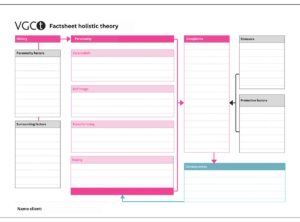
The holistic theory on diagnoses

Looking at the interconnectedness of your client’s issues, as mentioned in the two examples above, is an example of a holistic approach. It’s used to gain a better understanding of the relationship between the client’s development, personality, and the symptoms they experience. It’s also very helpful to explain to your client how certain issues interconnect. And how, for example, certain behavior from their childhood, keeps them from healing. 

holistic framework example
The Holistic Framework

A possible model to use for the holistic theory consists of three parts: 

  1. The head: structural vulnerabilities or history. This consists of personal factors (genetics) and surrounding factors (the context of the family – cultural background, how someone was raised, childhood trauma)
  2. The middle: personality traits or instrumental vulnerabilities. These entail relatively fixed beliefs that someone holds about themselves, the world, or others.
  3. The tail: complaints and problems. What is the main complaint and what perpetuates what. 

If you click here, you can download a worksheet for the holistic theory, developed by the VGCT and translated into English.


Structured treatment plans

The diagnosis and the treatment plan set the structure for the treatment. There are protocols available for the process and guidelines for the number of sessions per diagnosis. Every process has a clear start and finish. Make sure to stick to this process as much as possible. It is well thought-through and very helpful for you as a therapist, as well as for the client: Everybody knows what is expected. Of course, there is some room to deviate. For example, when something intense happened in the client’s life, there is space to talk about that in the session. However, we really encourage you to return to the initial plan every time. For example, take ten minutes to talk about the current situation, and return to the plan for today after that.

Once again: a therapist in the Netherlands does not take over control. They set the structure, the framework, they will guide, but the client is in charge. You will be in this together.


Evaluation and closure

It can be very difficult to end a therapy process. There is always room to improve more, even though the initial goals are reached. If you use a certain protocol, closure is easier since you slowly reach the end of the process. But also if you are not following the protocol, there is still a guideline for the number of therapy sessions attached to a certain treatment plan. Or you make a plan with your client: how many sessions do you both think are necessary to reach a certain goal? You can also always emphasize on the insurance matter again; in basic GGZ, the insurance often only covers a certain number of sessions.


Make sure to announce in advance that the end of the treatment is approaching. Tell your client that you have reached the final step in the protocol, that there remain – for example – four sessions. Your client will feel more pressure to work towards their goals, there is a sense of urgency.


The closure comes with an evaluation. The intake form is used to evaluate the treatment, together with the questionnaire(s) that you used at the start of the treatment. Focus on the initial diagnosis and the goals that you agreed on at the start. There is probably always more to work on, but that was not part of this specific treatment plan. Celebrate the goals that you’ve reached together. The client can be very proud of what they achieved!


To conclude

We all agree that it’s very challenging for foreigners to come to work in a local environment. There’s the language, cultural differences, protocols, specific ways of working.. With these articles, we hope we have given you some tools to kickstart your work journey here. In addition to these articles, we have written extensive guidelines about working in the Netherlands; from peculiarities about the Dutch culture to roles and responsibilities within Mental Health Care. The guidelines can be found here.


Please remember that PsyGlobal is here for you. There is no such thing as a stupid question, and we are available to answers yours anytime. You can also participate in intervision sessions to exchange experiences and ideas with us and fellow foreign mental health professionals, attend webinars or enroll for trainings. We will update you regularly through LinkedIn or our newsletter. Thank you for being part of PsyGlobal, and good luck!